A landlord’s guide to complying with the Homes (Fitness for Human Habitation) Act 2018
If you are a landlord, you have a duty to provide your tenants with accommodation that’s fit for human habitation.
Fortunately, this is something the vast majority of landlords already do. When you maintain your properties to high standards, they’re safer for tenants, resulting in fewer issues and complaints.
Updated: 24.02.26
This content was factually correct when written but may not reflect current developments or information.
- What is the Homes (Fitness for Human Habitation) Act 2018?
- What makes a property “unfit” for habitation?
- Damp and mould – blaming “tenant lifestyle” is a thing of the past
- Awaab’s Law and the Decent Homes Standard
- Awaab’s Law: quick response times for serious hazards
- What about private landlords?
- The Decent Homes Standard
- Minimum Energy Efficiency Standards (MEES)
- What happens if a property is deemed unfit?
- Are there exceptions (when is the landlord not responsible)?
- How does this differ in Wales, Scotland, and Northern Ireland?
In this article
- What is the Homes (Fitness for Human Habitation) Act 2018?
- What makes a property “unfit” for habitation?
- Damp and mould – blaming “tenant lifestyle” is a thing of the past
- Awaab’s Law and the Decent Homes Standard
- Awaab’s Law: quick response times for serious hazards
- What about private landlords?
- The Decent Homes Standard
- Minimum Energy Efficiency Standards (MEES)
- What happens if a property is deemed unfit?
- Are there exceptions (when is the landlord not responsible)?
- How does this differ in Wales, Scotland, and Northern Ireland?
In recent years, the law in England has become much stricter about what constitutes ‘fitness for human habitation’. This means you need to regularly review whether your rental properties are compliant. If they aren’t, you face the risk of claims from tenants, enforcement action, and insurance problems if something goes wrong.
To help ensure you’re up to date with the latest requirements, we take a closer look at your responsibilities under current legislation in England, along with important changes introduced by the Renters’ Rights Act 2025 (including Awaab’s Law and the Decent Homes Standard). We also examine similar legislation affecting Scotland, Wales, and Northern Ireland.
What is the Homes (Fitness for Human Habitation) Act 2018?
In England, the Homes (Fitness for Human Habitation) Act 2018 strengthens the requirement for rented homes to be fit for habitation at the start of a tenancy and throughout it.
It does this by amending the Landlord and Tenant Act 1985 to make “fitness for habitation” an implied term in nearly every tenancy contract.
This increases accountability. While local authorities still have powers to fine landlords for hazards, tenants can also take action through the courts to put problems right (and may seek compensation, depending on the circumstances). Practically speaking, if there are serious defects or hazards that make any of your rental homes (or their communal areas) not reasonably safe or suitable to live in, you must put them right.
What makes a property “unfit” for habitation?
When many people think of homes that are unfit for habitation, damp and mould often spring to mind. While this is one of the hazards, there are many others you need to be aware of.
The definitive source for helping you decide whether a property is unfit for habitation is the government’s guide for landlords, which explains the requirements of the 2018 Act.
This publication states that courts can decide whether a property is fit for human habitation by using the Landlord and Tenant Act 1985. To do this, courts can consider whether a property suffers from:
Repair issues (neglect or bad condition)
Structural instability
Serious damp
An unsafe layout
Insufficient natural light or ventilation
Issues with the hot and cold water supply
Problems with drainage or toilets
Facilities that make it difficult to prepare and cook food, or wash up
The courts can also be guided by any of the 29 hazards listed in the Housing Health and Safety (England) Regulations 2005. These overlap with the above problems and are grouped under four main hazard profiles. They are:
Physiological requirements. Including damp and mould growth, excess cold or heat, plus exposure to non-microbial pollutants such as asbestos, lead, or Volatile Organic Compounds (VOCs).
Psychological requirements. Inadequate space for living and sleeping, lack of security against unauthorised entry, a lack of lighting, or exposure to noise.
Protection against infection. Particularly, problems with hygiene, pests such as rats and mice, sanitation, and water supply.
Protection against accidents. Including falls, electric shocks, fires, burns, scalds, collisions, cuts, and strains.
Shelter England also has a user-friendly guide to the rights and duties involved in upkeeping housing conditions.
Damp and mould – blaming “tenant lifestyle” is a thing of the past
The Housing Ombudsman Service has made it clear that damp and mould should be treated as a serious health risk. Landlords are expected to take responsibility for diagnosing the cause and putting it right, rather than relying on the tenant’s lifestyle as a cause, such as drying clothes indoors.
In practice, this means that you should:
Treat every report as urgent (especially where there are children, elderly occupants, or health conditions).
Find the cause, whether it’s due to leaks, building defects, failed ventilation / extraction, inadequate heating, insulation gaps, or cold spots.
Put the problem right properly, and communicate your plan and timescales in writing to your tenants.
Keep clear records of what you found and what you did (photos, dates, contractor notes).
From an insurance point of view, damp and mould in one of your rentals is an area where delays and lack of evidence of attempts to resolve the issue can turn a manageable repair into a tenant dispute and a difficult insurance claim.
Awaab’s Law and the Decent Homes Standard
Two reforms are tightening the definition of “habitable” in England. Both Awaab’s Law and the Decent Homes Standard currently apply to social housing, with both set to be extended to the private rental sector.
Awaab’s Law: quick response times for serious hazards
Awaab’s Law is named after Awaab Ishak, a two-year-old boy who died in December 2020 after prolonged exposure to mould in his home. The family had made repeated reports of the mould to their social landlord in the three years before his death, but they were not resolved.
Awaab’s Law has been in force for social housing in England since 27th October 2025. It introduces prescribed timeframes for investigating hazards and completing urgent safety works.
Under the current rules for social landlords:
If a potential emergency hazard (such as a dangerous electrical fault or major leak) is identified, the landlord must investigate within 24 hours.
For potential significant hazards (including dangerous damp or mould), landlords should investigate within 10 working days.
Where an investigation concludes there is a significant hazard and identifies “relevant safety work”, that safety work must be completed within 5 working days (and emergency safety work within 24 hours).
Landlords generally need to provide a written summary within 3 working days, running alongside the safety-work timetable.
If the home cannot be made safe within the prescribed timeframe, the landlord must offer suitable alternative accommodation until it is safe.
The government has also set out a phased expansion of in-scope hazards that will begin to apply during 2026 and 2027
What about private landlords?
The Renters’ Rights Act 2025 is set to extend Awaab’s Law to the private rental sector. This will mean all landlords will also have to comply with legally enforceable repair timelines where a home contains serious hazards.
The government has stated that the details and implementation timescales will be set through further regulations (following consultation), with the exact start date and the final scope/timeframes to be confirmed in secondary legislation.
That said, it’s advisable for private landlords to begin complying with Awaab’s Law now. Not only can this help keep your tenants safer, but having a documented, fast, and replicable hazard-response process will provide you with the evidence you need if a claim or dispute arises.
The Decent Homes Standard
The Decent Homes Standard (DHS) is the government’s baseline for what a rented home should provide. Under the DHS, a property will need to meet minimum expectations on safety, repair, facilities, warmth, damp, and mould – and, for the first time, it will apply to both social housing and the private rented sector in England.
The government has confirmed the new DHS will apply to private rental properties by 2035 (when full regulation and enforcement begin).
In practical terms, a home will only be “decent” if it meets all five of these tests:
Free from serious hazards (no Category 1 hazards under HHSRS)
Reasonable state of repair
Reasonably modern facilities and services (e.g., kitchen/bathroom age and condition)
Thermal comfort (in practice, this is closely related to minimum energy ratings. A low EPC rating is likely to result in failing to meet thermal comfort criteria.)
Free from damp and mould (now an explicit criterion)
Minimum Energy Efficiency Standards (MEES)
The government’s private rented sector energy proposals set an ambition for private rented properties to reach the minimum energy efficiency standard of EPC Band C, with a compliance deadline of 1st October 2030. If you delay upgrades required to meet this standard, you could be under pressure to upgrade when tradespeople are in high demand and prices are high.
What happens if a property is deemed unfit?
If a home is deemed “unfit for human habitation”, it’s rarely just a maintenance problem. It can trigger legal action and enforcement, and it can affect your property insurance.
1) Court action (claims and compensation)
A key point of the Homes (Fitness for Human Habitation) Act legislation is that tenants don’t have to wait for the local authority to intervene. They can take direct court action for breach of the implied term in the tenancy agreement that the home will be fit at the start of the tenancy and throughout it.
2) Repairs and compensation (plus legal costs)
If a claim succeeds, the court can order you to carry out works to remedy the problem. It can also award compensation for the period the tenant has lived with the problem (and you may also face legal costs). This is where insurance for landlord legal expenses can be valuable – it’s designed to help cover the cost of defending legal claims and disputes, subject to the policy’s terms.
3) Rent Repayment Orders (for serious breaches)
In more serious situations, landlords can also face a Rent Repayment Order (RRO). This is a tribunal order that can require repayment of rent (for a maximum period of 12 months) where certain housing offences have been committed.
Are there exceptions (when is the landlord not responsible)?
There are exceptions, but they’re stricter than many landlords assume. They include:
Tenant-caused damage. If the unfitness is directly caused by the tenant’s actions or possessions, responsibility may not sit with the landlord.
Events outside your control (‘Acts of God’ like storms and floods). You might not be to blame when these occur, but you’re still expected to act promptly to make the home safe and habitable again.
No access. If a tenant refuses access to the property to put a problem right, you still need to show you acted reasonably. In this case, you need to keep a record of the written notice, clear records, and repeated attempts to arrange entry.
How does this differ in Wales, Scotland, and Northern Ireland?
The Homes (Fitness for Human Habitation) Act 2018 applies only to England, but the underlying principles apply across the devolved nations in different legal forms.
Wales
Wales has its own “fitness for human habitation” law under the Renting Homes (Wales) Act 2016 and the Renting Homes (Fitness for Human Habitation) (Wales) Regulations 2022, which have applied from 1st December 2022. The law sets out the landlord’s duty to keep the dwelling in good repair and ensure it is fit throughout the occupation contract, under a list of 29 “matters and circumstances”.
Scotland
Scotland uses the Repairing Standard and the Tolerable Standard. In practice, landlords must ensure that properties meet these standards (covering areas such as structure, installations, damp, safety, and basic habitability). Tenants also have a specialist tribunal route for enforcement. Official guidance summarises a landlord's duty and the types of repairs covered.
Northern Ireland
Northern Ireland has a Fitness Standard for rented accommodation, covering basics such as heating, lighting, ventilation, water, drainage, and cooking facilities, as well as the landlord’s responsibility for major repairs and dealing with hazards.
If you rent out property in multiple UK nations, it is advisable to create a compliance checklist for each property setting out the requirements under the applicable legislation.
Related guides and insights

What is a Section 8 notice?
Here, we look at Section 8 notices in more detail and the circumstances in which they can be used. For example, Section 8 notices are typically served when tenants are in arrears.

A guide to understanding landlord harassment
Landlord harassment is essentially anything a landlord does that prevents tenants from living peacefully in their homes. Examples of landlord harassment in the UK vary widely but includes incidents such as changing the locks without tenants’ knowledge.

A landlord’s guide to rental arrears
When a tenant falls into rental arrears, it can cause major problems. We look at how to deal with non-payment of rent, what options are available to you and how you can protect yourself against loss of income.
Damp and mould in rental property
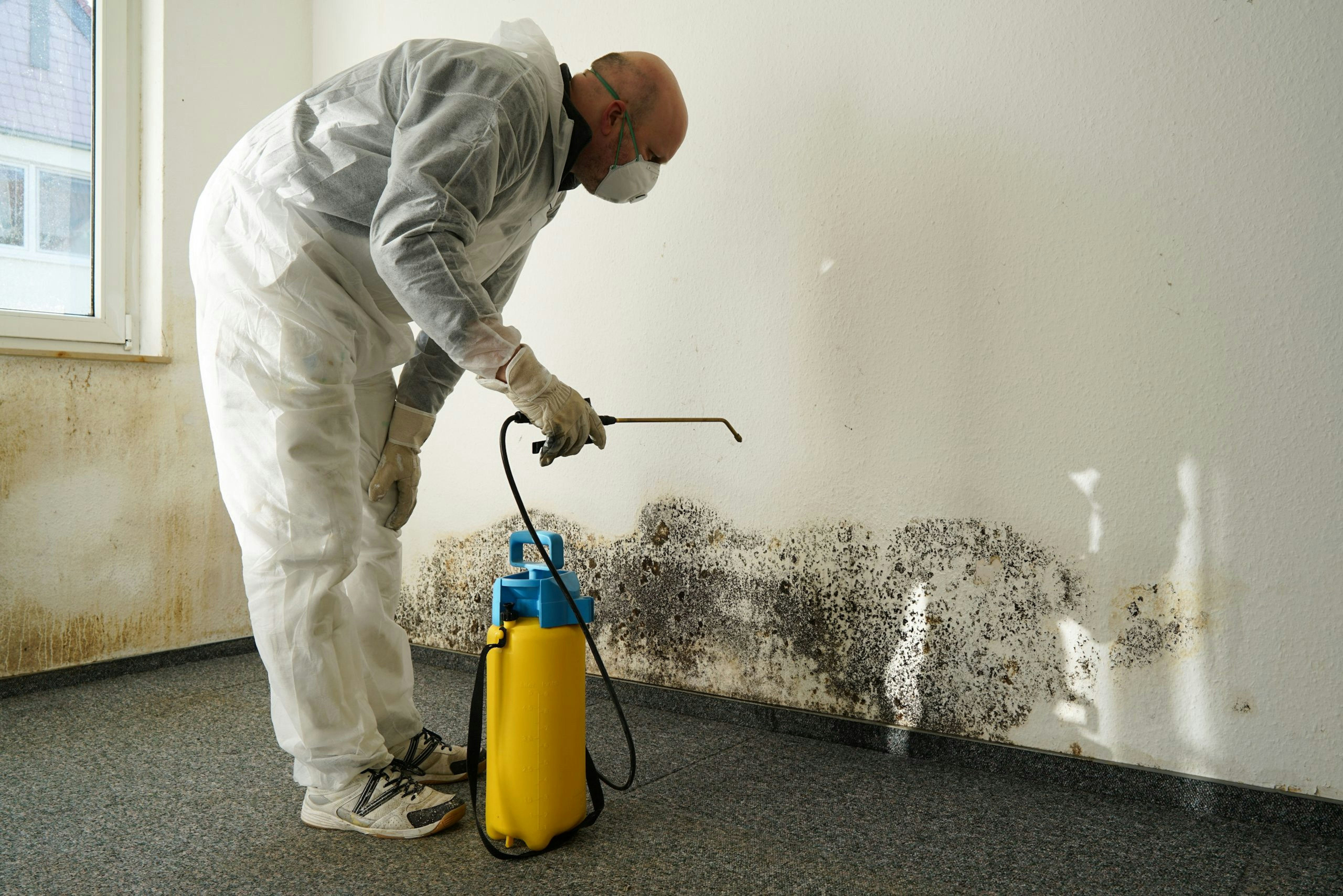
Damp and mould can cause serious issues. Here, we take a look at the causes of damp and the responsibilities tenants and landlords both have in resolving the problem.