Protecting AnthroTek's path to growth in emerging tech industries
By Alan Boswell Group
With a PhD in material chemistry, 37 authored research articles, two reviews of literature, and one patent in the field of chemistry, nanotechnology, and material science, it might be surprising to discover that Dr Raoul Peltier would get his big break in business through his weekend hobby: making custom silicone face masks.
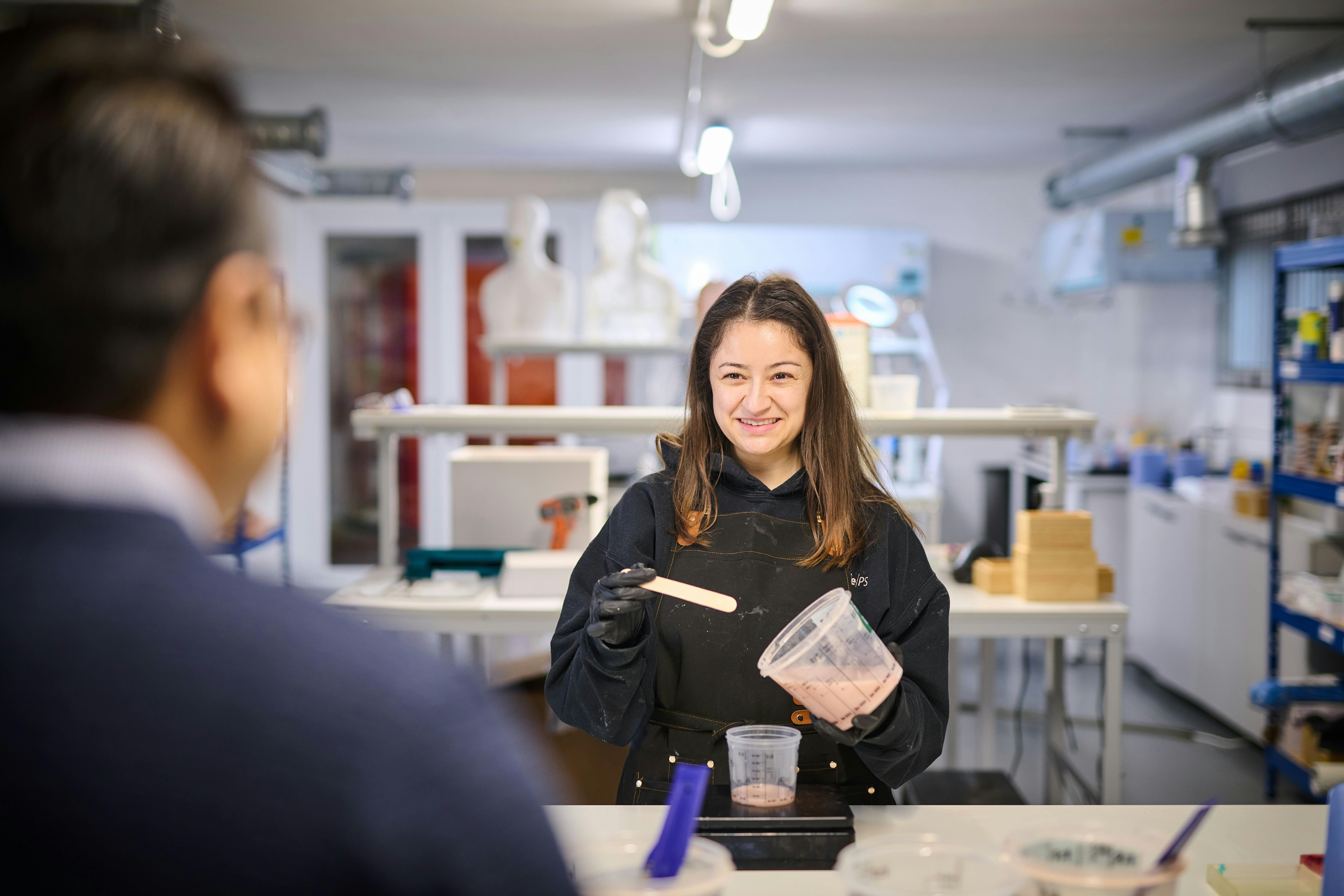
Not content with his day job of developing a device to 3D print DNA, Raoul was spending his spare time in his garage blending traditional mask-making techniques with modern technology to create hyper-realistic, bespoke masks for the film industry. But it wasn’t until a chance encounter with his now-business partner, Nazmus Tareque, that the work Raoul was producing was to be fully realised.
Nazmus (Naz) met Raoul while punting on the River Cam at a local networking event in Cambridge. Naz recalls, “Raoul was head of DNA synthesis at a biotech in Cambridge, but his side-project was producing amazing prosthetic pieces for movies, working with Danny Boyle on the 28 Years Later movie. He’d been doing this, as a hobby, for eight years. But it’s a hobby that had grown over eight years. Raoul’s a material chemist with a deep understanding of polymer chemistry, but with the mind of an artist.
“So, I saw it. I invited him for lunch, and I said ‘Look, this is super cool. We should talk about it, because I know people from the medical simulation industry, people working with robotics, tinkering with the idea of humanoids and all these things.’
“We started having a conversation, one thing led to another, and AnthroTek was born.”
AnthroTek (Anthro comes from the Greek word anthropos, meaning ‘human’, and Tek is an abbreviation of technology, so ‘human-technology’) was established in 2024.
[Anthrotek] is an advanced material science company that is focused on solving problems for medical simulation, soft robotics, and the cinema industry.
“It's an advanced material science company that is focused on solving problems for medical simulation, soft robotics, and the cinema industry. When you talk about advanced material science, what we are actually talking about is soft materials like silicone, rubber, polymers; materials that can mimic human tissue. That’s the very core of what we do.
“Raoul’s expertise in material chemistry and his knowledge in the cinema industry gave us an edge, a bit of focus. So, when we started hiring, we brought people in with this understanding.”
The first hire was Dr Paul Stanley, who holds a PhD in Chemistry and Material Science and is an expert in 3D modelling and printing.
“There's a team around this core competency, which is soft material chemistry, material science. So, the immediate work we got was from clients who wanted us to solve very complex problems for medical simulation. To solve these problems, we had to combine the knowledge of both material chemistry and the movie industry.
“And this has been the secret of our success; we retain the IP of what we produce. We now have a product that came out of this work: Anthropad. Anthropad is a new type of skin pad for people to test injectable pharmaceuticals.”
Getting these early orders has been key to AnthroTek’s success.
“We were very lucky,” Naz concedes. “When we were having those early conversations, it was just an assumption that we had the basis for a business. But you don’t have a business unless someone is willing to pay for it.
We started finding clients immediately; we were very lucky. The first week after the company was formed in July 2024, we received a medical simulation request from a client in Japan who was looking for a highly complex laparoscopic simulation model for surgical camera testing.
“When we pitched the idea to investors, they had the same questions: ‘Who is going to buy it? Do you have any proof?’. But we started finding clients immediately; we were very lucky. The first week after the company was formed in July 2024, we received a medical simulation request from a client in Japan who was looking for a highly complex laparoscopic simulation model for surgical camera testing. It was a substantial project.
“We also had an adjacent project that we were doing for The Face Forge (the subsidiary company of AnthroTek specialising in the special effects work for movies), producing 17 Christmas elf masks for a theme park in Thursford, Norfolk. We were busy from the get-go.”
It was these projects, along with their founding team, vision, and growth plans that gave investors the confidence to back AnthroTek. The company’s first funding round was completed in September 2024 and provided the funds to invest in a dedicated workspace to expand operations.
The company has used the resources to develop the technology to recreate entire human body parts for medical simulation training.
“We have a base human model, which is anatomically accurate, vetted by professionals, doctors, and surgeons. We are then able to produce various body parts that are unique. For example, we might get a request for a specific surgical simulation where an organ is in a very particular position.”
One thing which really excites Naz is how the development of advanced AI might lead to humanoid robotics.
“The humanoid market is going to grow. Physical AI is the next phase of development. We want to be the company that produces skin for them.
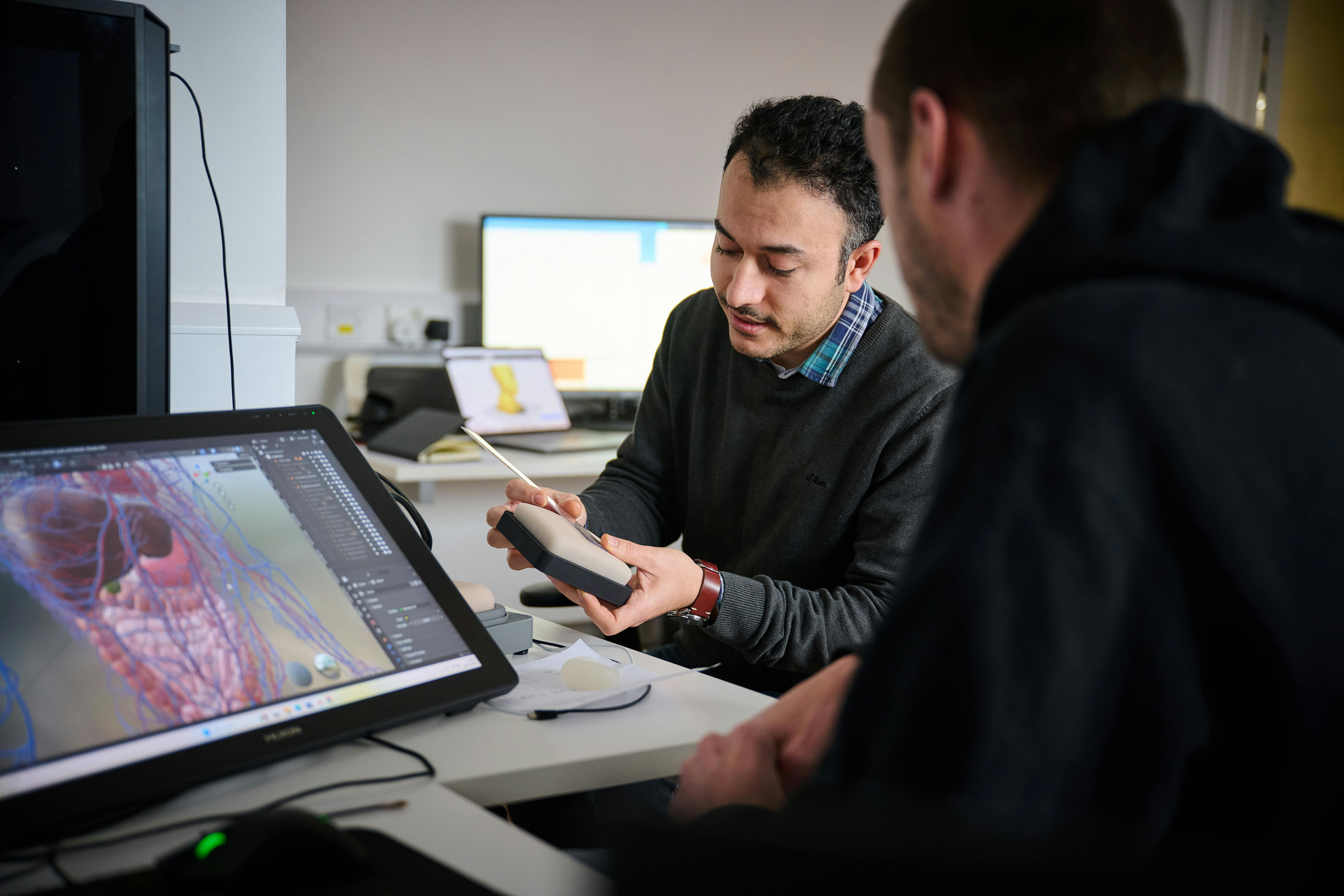
We want to understand how humans sense things. So not only will synthetic skin look similar to human skin, but it will behave similarly. This is a very long-term project.”
Understanding the intricacies of this work, the risks involved, and how best to protect the business with an appropriate insurance programme had become complex.
For the work we did with 28 Years Later, they asked us to produce a mask that could be set on fire - a very risky venture. We spoke to a lot of insurance brokers, but they didn’t really understand what we were doing.
“For the work we did with 28 Years Later, they asked us to produce a mask that could be set on fire - a very risky venture. We spoke to a lot of insurance brokers, but they didn’t really understand what we were doing. They were basically trying to put us in a box that we didn’t fit in. We are a material science company, but we work with cinema, medical simulations, and soft robotics.
“After getting our previous insurance, we felt it was not fit for purpose because it wasn’t representative of our risks. It was not considerate of how we want to grow and expand, and how it could expand with us. So, we wanted to find a partner that could understand what we were doing and what we were planning. We really needed somebody who understood us.”
It was at another networking event in Cambridge that Naz’s insurance challenges were resolved when he met Rebecca Sugden, a tech-insurance expert at Alan Boswell Group.
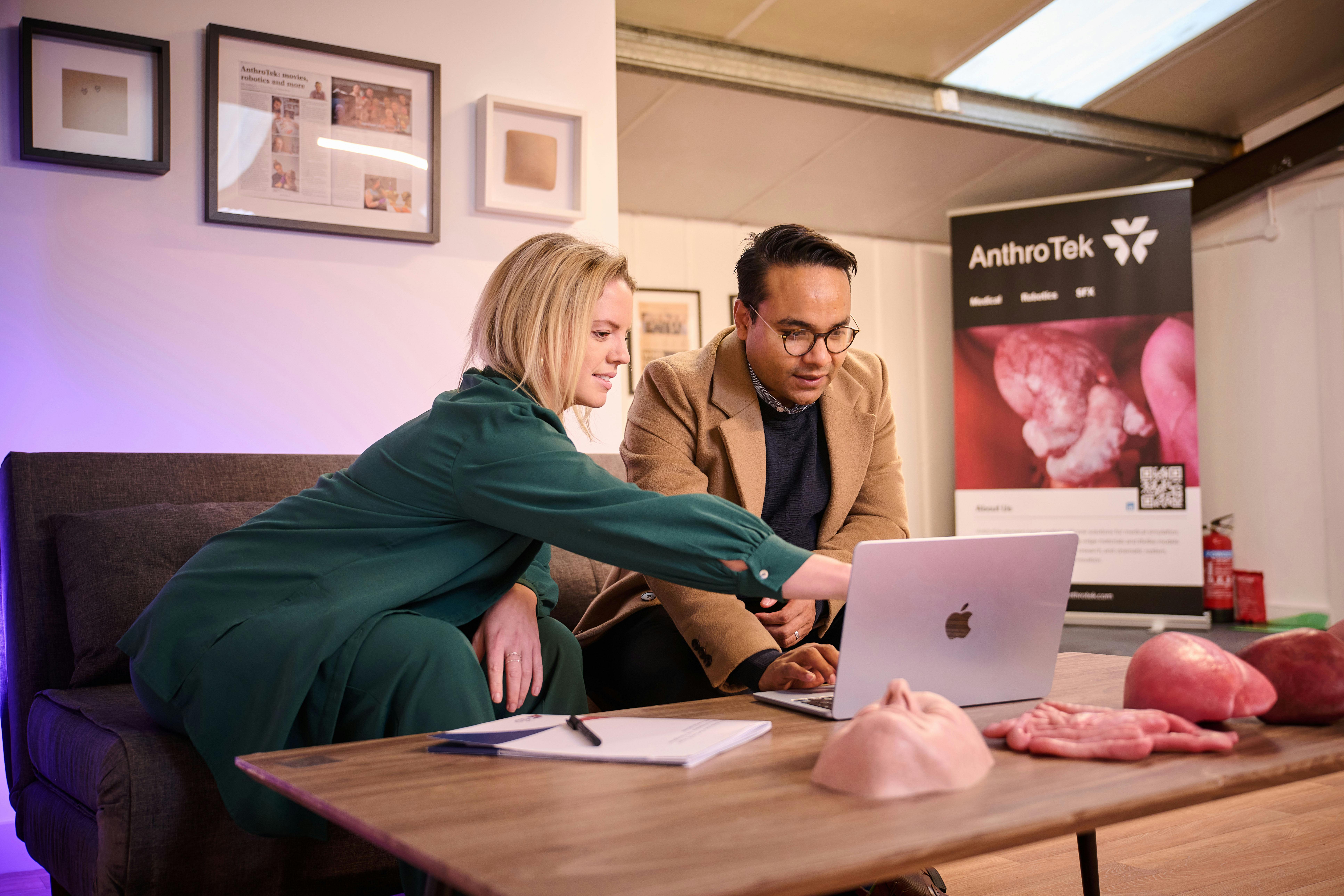
(L-R) Rebecca Sugden and Naz Tareque
“We won an award at the Cambridge Independent Science and Technology Awards. Rebecca came over and congratulated us. She then followed up, and we had you [Alan Boswell Group] and a few other brokers competing for our business. But the differentiator was the care and interest in the business by Boswell’s. It felt like you understood us.”
The differentiator was the care and interest in the business by Boswell’s. It felt like you understood us.
Rebecca has worked with the AnthroTek team to develop a comprehensive insurance solution that includes commercial combined cover, liability policies, professional indemnity, MLP, cyber risk protection, and business travel insurance. Each policy is carefully tailored to accurately reflect the company's activities, ensuring insurers have a clear understanding of the work performed by the business. This was particularly important given the unique challenges AnthroTek faces, including trading and supplying products internationally, managing high-risk projects such as creating masks designed to be set on fire while worn by actors for film productions, and developing cutting-edge technology and materials that are entirely new to the market and unfamiliar to insurers. These complexities required a bespoke approach to ensure the cover was fit for purpose and adaptable as the business continues to innovate and expand.
The insurance is now part of the foundations of the business as it grows from a start-up to an established player in the region’s science and tech landscape. So, what does the future look like?
“We have short, mid, and long-term goals. In the short term, we’re acquiring some really good B2B clients, enterprise-level clients, and we’re solving problems for them.
“We’re retaining IP that we can scale up for mass production. But we’re also doing some hardcore research and development. We’re funding a PhD at Warwick University, where we’re looking into materials and polymers for healthcare applications and robotics.
“In the long-term we want to develop some patents and do things that can really take us far. We are building for the future.”
With ambitious plans to scale their IP, invest in cutting-edge R&D, and shape the future of synthetic materials, AnthroTek is firmly focused on growth. Their tailored insurance programme gives them the confidence that they are appropriately protected, protecting their unique operations and enabling continued expansion into new markets.
Find out more about AnthroTek and The Face Forge.
Speak to an insurance expert
To discuss the insurance for your business and find out more about how we support start-ups and established companies in the tech industry, get in touch with our team.
Make an enquiry

Why is intellectual property insurance essential for your business?
What is intellectual property and how can IP insurance help me protect my rights?

Pure Resourcing Solutions - building resilience in a changing recruitment landscape
We spoke to Annette Wyld, co-owner and Finance Director, on the evolution of Pure Resourcing Solutions and how ABG help protect their risks as they grow.

Do you need cyber insurance to protect your self-drive hire business?
Recent attacks on car hire firms across the world have highlighted once again the importance of protecting systems and business operations; here’s how you can stay one step ahead.

The AI risk gap: why businesses lack coverage
We look at how AI use has changed, the global regulations you need to be aware of, and how insurance can cover the risks of using AI.