How to attract and keep long-term tenants
The Renters’ Right Act has abolished fixed-term tenancies. For landlords focused on securing reliable, regular rental income, attracting and retaining long-term tenants is now more important than ever.
Updated: 01.06.26
In this article
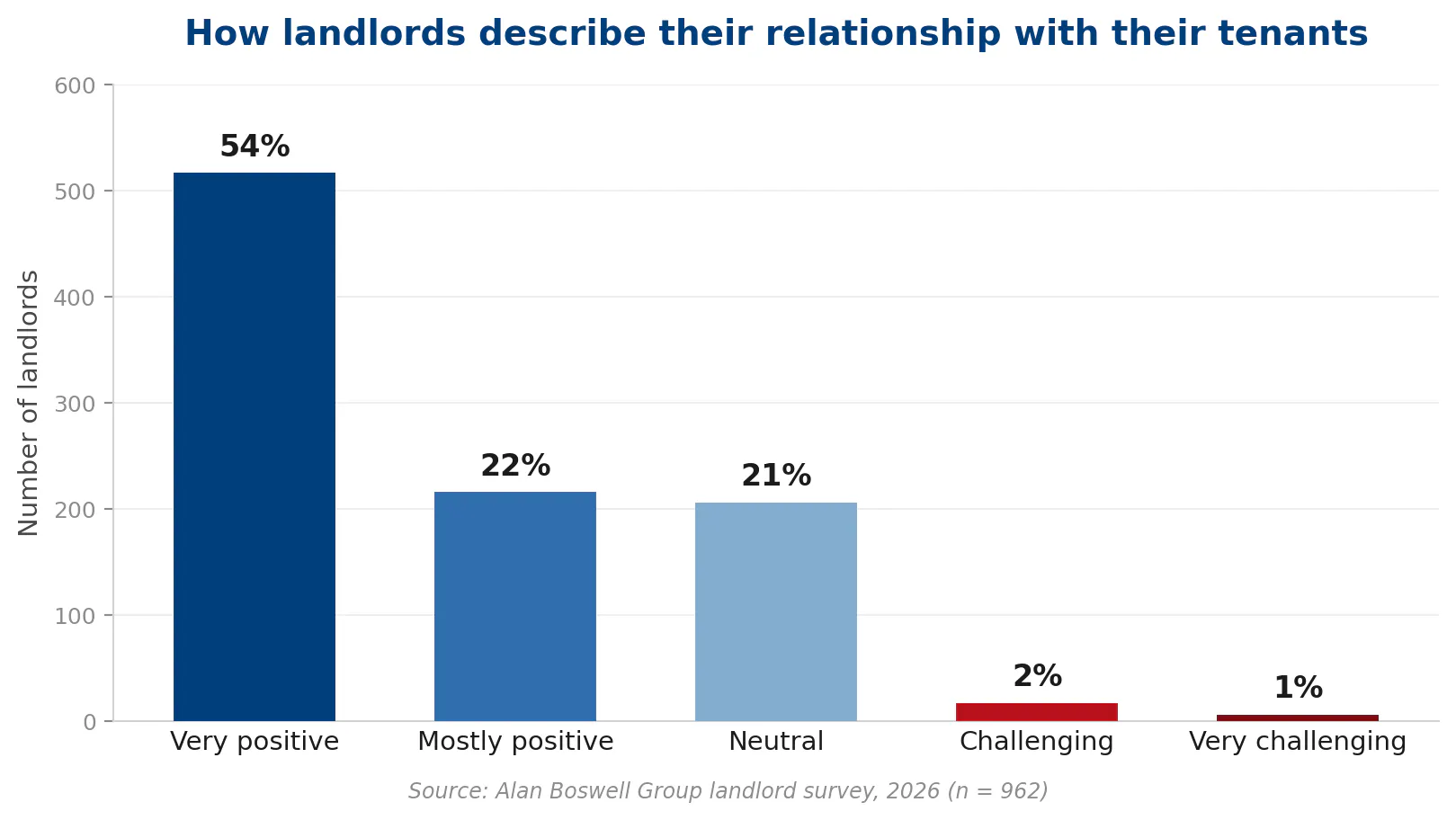
In a recent survey we conducted of more than 950 landlords, over three-quarters described their relationship with their tenants as positive, and half had not increased rents at all in the past year. Keeping good tenants is something most landlords are already working at, and the guidance below explains how to do it well.
As well as providing financial security, long-term tenants can help you avoid having an empty property and save you time and money when it comes to marketing your property and tenant referencing checks.
What’s considered a long-term tenant in 2026?
Before the Renters’ Rights Act, a long-term tenant typically meant a tenant who had signed an assured shorthold tenancy (AST) for two to three years.
Now, fixed terms no longer exist. Instead, the most common type of tenancy is an assured periodic tenancy (APT). These rolling tenancies mean tenants can leave by giving two months’ notice at any time. With that in mind, a ‘long-term’ tenant is simply one who chooses to continue renting the property year after year.
You can find out more about the different types of tenancies in the UK in our in-depth guide.
Do landlords prefer long-term tenants?
Having long-term tenants in your property can save you time, money, and worry; benefits include:
No void periods – giving you a consistent income and saving you from making Council Tax and other property-associated payments. If your property is empty for more than 30 days, you’ll need to make your insurance provider aware and may need to change your policy.
Less admin – as you won’t have to market the property, carry out inventories or tenant referencing checks as often.
Property care – tenants who see the property as their long-term home are more likely to take care of it and report issues quickly, helping to minimise wear and tear.
Peace of mind – established tenants remove the stress of worrying whether the property will be treated well.
Better tenant-landlord relationships – it can be easier to build strong relationships with long-term tenants, which can be valuable for ensuring good maintenance.
Are there any drawbacks to long-term tenants?
The Renters’ Rights Act means landlords can only increase rent once a year (using a Section 13 notice). Having long-term tenants can lead to rent stagnation and make it harder to keep rent aligned with current market rates. You can mitigate this by maintaining open communication with tenants about rent, and avoiding sudden, large increases, and instead offering small incremental increases in line with market rates.
Not having a fixed tenancy end date can make it trickier to coordinate repairs or refurbishment. Plus, if you’re unlucky with your tenant and have issues like missed rent or deliberate property damage, it can drag on.
Do long-term tenants get extra legal rights?
No, a long-term tenant doesn’t gain any extra rights in addition to those afforded to a short-term tenant. Long-term tenants don’t gain any ownership rights or immunity from eviction, and landlords can use a valid Ground under Section 8 to evict.
However, in some circumstances, if a former tenant remains in the property for a long period without consent (ten to 12 years), they may be able to claim legal possession of the property through squatters’ rights.
Five strategies to keep your tenants for the long term
Not everyone who rents is looking for a long-term tenancy, but you can improve your chances of attracting and keeping long-term tenants by:
Renting your property unfurnished
An unfurnished property gives tenants the chance to make it their home. You may also want to allow your tenants to decorate the property to encourage greater attachment; if you’re concerned about décor choices or paint colour, make sure your tenancy agreement includes a clause requiring tenants to return the property to its original state when they leave.
Allowing pets
The Renters’ Rights Act means you cannot impose a blanket ban on tenants with pets, but instead, you’ll need to consider each request individually. However, allowing pets helps build loyalty and encourages tenants to stay.
If you have genuine concerns about tenants keeping pets (for example, keeping a large dog in a small flat) or allowing them would breach a superior lease, you can deny the request (but make sure you give your reasoning).
Providing proactive maintenance
If you proactively keep on top of property maintenance and upgrade items, tenants are more likely to stay. For example, upgrading kitchen appliances and carpets or carrying out repairs on draughty windows and doors. Offering more than the basics can help set you apart from other landlords and encourages tenant loyalty.
Maintenance is also one of the biggest demands on a landlord’s time: it was the second most commonly cited challenge in our survey, after legislative changes. Staying on top of maintenance, rather than simply reacting to requests, benefits both sides, as responsiveness is a key reason good tenants choose to stay.
Requesting fair rent increases
The security that good tenants provide may mean it’s worth keeping rent levels slightly below the peak market rate, giving you the benefit of no void periods and minimising admin. However, bear in mind that you can only increase rent once a year, up to the market rate.
This is already common practice: in our survey, half of landlords had not increased rents at all over the past 12 months, and most of those who did limited the rise to no more than 10%.
Protecting your rental income
Long-term tenants bring multiple benefits, but financial situations can change almost overnight. Redundancy, illness, and relationship breakdowns can all impact secure tenancies. For landlords, this underlying uncertainty means there is always a risk that tenants could fall into rent arrears.
Landlord insurance policies, such as legal & rent guarantee insurance, can cover missed rent and help you with the eviction process to regain possession of your property, providing you with a consistent rental income and allowing you to find new tenants.
If you do suddenly find yourself with an empty rental property, don’t forget to inform your insurer, and they may require you to take out insurance for your unoccupied property if it’s going to be empty for more than a set time period. Standard landlord insurance will often restrict cover after a certain number of consecutives days or won’t provide any cover at all after a certain period, so it’s crucial to put suitable protection in place.
Encouraging long-term tenancies
Long-term tenancies can benefit both landlords and tenants, providing stability and peace of mind for both parties.
While a large part of encouraging long-term tenants is making them feel at home in your property, the most important aspect is ensuring you meet your obligations. Tenancy agreements should also set out clear conditions so that both you and your tenants understand your respective responsibilities.
Although risk is part and parcel of any property investment, you can protect yourself from financial uncertainty with tailored landlord insurance and legal & rent guarantee insurance. To find out more about our award-winning policies, speak to our team on 01603 216399.
Need help with your insurance?
You can find more guidance on renting out your property in our landlord hub. For tailored advice about landlord insurance, you can call an expert member of our team.
Related guides and insights

Finding good tenants | A landlord's guide
Every landlord wants to find good tenants for their buy-to-let properties. In this article, we share our tips and tricks for attracting responsible and pleasant tenants – and avoiding those ‘tenants from hell’.

How to identify and manage problems with tenants
Troublesome tenants are a landlord’s worst nightmare. We look at ways of avoiding bad tenants, spotting the signs that things are going wrong, and how to deal with common issues.

The ultimate list of landlord responsibilities
Whether you’re an experienced landlord or managing your first property, it’s important to understand your legal responsibilities, or you could end up facing hefty fines and even prosecution. We look at what those responsibilities are to help ensure you stay on top of your legal duties.

A landlord’s guide to the Renters’ Rights Act
Designed to increase rental security, the Renters’ Rights Act brings in new rules on tenancies, evictions, pets, and rent increases. We explore the key changes landlords need to know about.