
In this article
A motorhome or campervan is more than just a vehicle. Not only does it contain personal belongings and expensive travel equipment, but for many owners, it’s also a key part of their adventures and a source of many happy memories.
For this reason, theft can be particularly distressing and disruptive. It takes time to make your vehicle your own, and a replacement vehicle won’t quite feel the same. And even if your motorhome or campervan is eventually recovered, there’s every chance that you’ll need to deal with damage, missing possessions, and interrupted travel plans.
This is why good security focuses on making your vehicle difficult, noisy, and time-consuming to steal. No single device can erase the risk of theft, but if you combine several well-chosen measures, they can make your prized possession a far less attractive target.
How common is motorhome theft in the UK?
Unfortunately, there are no official statistics specifically on motorhome and campervan theft.
However, community-reported data shows that theft remains a continuing concern. Members of the Stolen Motorhome Database Facebook group reported more than 130 motorhome and campervan thefts during 2025 – more than two a week.
Earlier research based on Freedom of Information responses from police forces found that reported caravan and motorhome thefts rose by 13.8% between 2021 and 2022, although they remained 24.8% below their 2019 level. Many stolen vehicles aren’t recovered. For example, West Yorkshire Police recovered only 51 of the 225 caravans and motorhomes reported stolen between 2019 and 2022.
ONS figures estimate that there were some 596,000 incidents of theft of all types of vehicles in England and Wales during 2025. Police also recorded 315,923 vehicle offences over the same period. While it’s not possible to determine how many of these crimes involved motorhomes or campervans, they do demonstrate that vehicle crime is common. This is why police security guidance recommends combining physical and electronic security, with careful parking and storage.
What do motorhome thieves hate the most?
Most thieves want to work quickly and without attracting attention. Effective motorhome security interferes with that in three ways.
Time delays. A thief may be less willing to target a vehicle if they can see that stealing it will require defeating several barriers. Even if a lock can be overcome, it can make the theft slower and riskier.
Noise and attention. An alarm, a visible camera, or another obvious security measure increases the chance that the thief will be noticed. A visible warning that the vehicle is alarmed or tracked may deter an opportunistic thief.
Illumination. Good lighting makes it harder for someone to approach or work on a vehicle without being seen. Police-backed security-lighting guidance suggests that low-level dusk-to-dawn lighting can be more effective than relying solely on sudden, bright, motion-activated lights. Timer-controlled lights inside your home can also make the property appear occupied when you are away.
The best physical anti-theft devices
Suitable physical anti-theft devices depend on the type of motorhome or campervan you own, where you keep it, and how often you use it. The following are all popular options.
Steering locks, clutch claws, and gearbox locks
A steering lock is highly visible through the windscreen and creates an additional barrier to driving the vehicle away. Full-cover steering locks generally offer more protection than a simple bar, although they require more storage space.
A clutch claw or pedal lock secures the clutch and brake pedals. A gearbox lock performs a similar job by preventing the gear lever from being used.
These devices are most effective when they are strong, correctly fitted, and easy enough to operate that you’ll use them every time you’re parked up.
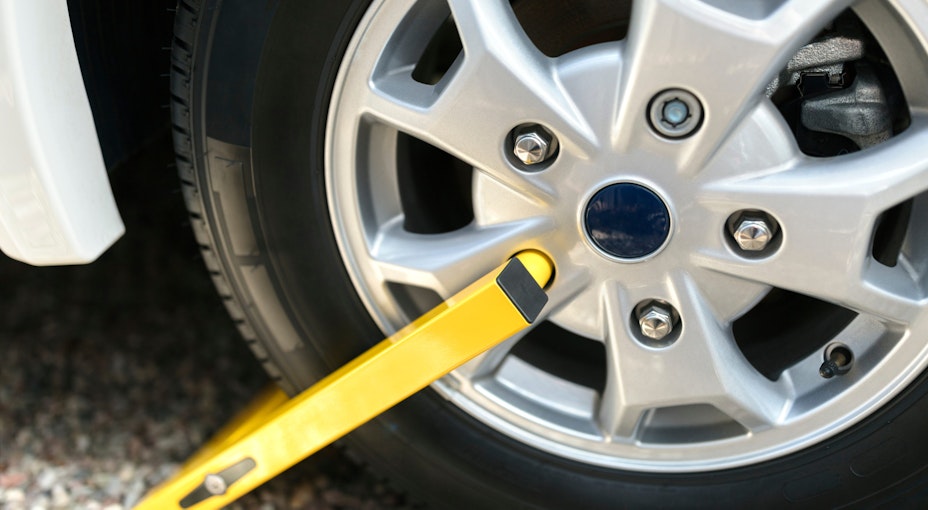
Wheel clamps
A wheel clamp can be inconvenient if you use your motorhome every day, but it provides a substantial physical and visual deterrent during long-term or winter storage.
Gates, driveway posts, and defensive parking
If you keep your motorhome at home, locked gates or a strong fold-down or telescopic driveway post can block the exit route. You may also be able to park another vehicle in front of the motorhome or park it nose-first to make removal more difficult.
When buying locks, posts, or other physical security products, look for independently assessed products. Secured by Design is the official police security initiative, and its ‘Police Preferred Specification’ identifies products that have met recognised security standards.
Doors, windows, and storage lockers
In addition to physical anti-theft devices, you should ensure you leave your vehicle as secure as possible by locking every cab door, habitation door, window, roof light, and external storage locker. Check the locks regularly and repair or replace anything that is damaged or no longer closes securely.
Avoid leaving cash, electronics, or other valuables on display. Motorhome policies may place limits on cover for belongings, while some home insurance policies offer personal possession cover away from home. Check your policies rather than assuming that everything you take with you is insured.
Keep a record of valuable equipment and its serial numbers. Photographs, identifying marks, and property marking can help the police identify and return recovered belongings. Do not leave spare keys, your V5C, or other important vehicle documents inside the motorhome when you are not using it.
Alarms, immobilisers, and trackers
Electronic systems can alert you to an attempted theft, prevent the engine from starting, or help locate the vehicle after it has been taken.
Alarms and immobilisers
An alarm draws attention to an attempted break-in, while an immobiliser prevents the engine from starting unless the correct key or electronic authorisation is present.
Thatcham Research’s security certification independently assesses alarms, immobilisers, wheel-locking devices, and tracking systems, certifying those that meet its security standards. Thatcham certification is widely used as an industry benchmark, although individual insurers decide which products they recognise.
Check whether your motorhome already has an alarm and immobiliser before buying additional equipment. If you add a system, have a suitable professional install it and keep the installation certificate.
Trackers
A tracking device does not physically prevent a theft, but it can help a monitoring service and the police locate a stolen vehicle.
Thatcham Category S5 systems are vehicle-tracking systems intended to detect unauthorised use and support recovery. For higher-value motorhomes, often those worth £50,000 or more, some insurers may require your vehicle to have an approved tracker fitted and operational. Be sure to check the requirements in your policy schedule and endorsements.
If a tracker is required, make sure its subscription remains active and that you understand how to operate the system.
Faraday pouches
With keyless entry systems, some motorhomes can be unlocked and started without pressing a button on the key. Thieves can use electronic devices to pick up the key’s signal, even when the key is inside your home, and pass it to the vehicle. The motorhome then acts as though the key is nearby. This is known as relay theft.
A Faraday pouch blocks that signal. Keep the main and spare fobs away from doors and windows and periodically check that the pouch still prevents the vehicle from detecting the key. This police guidance explains how to use Faraday pouches to prevent theft.
A pouch will not help if the key itself is lost or stolen. You can read about car key cover and the support it may provide for replacement keys.
CCTV
CCTV can discourage opportunistic activity and provide useful evidence following an attempted theft. Be sure to position cameras so they cover the vehicle and likely exit routes.
If a camera records beyond your property boundary, you need to be aware of data-protection rules. The Information Commissioner’s Office guidance on home CCTV explains how to limit what you capture, use appropriate signage, and store footage responsibly.
Safe travel habits
Security is not only something to consider when your motorhome is stored at home. Tiredness, poor planning, and a rushed arrival can all lead to avoidable mistakes while travelling.
One informal way to pace a motorhome trip is the 3-3-3 rule:
Drive no more than 300 miles in a day
Aim to arrive by 3pm
Stay for 3 days before moving on
It is a guideline rather than an official rule, and it will not suit every journey. However, it encourages you to arrive in daylight, inspect your surroundings, and secure your vehicle without rushing.
At each stop, it’s a good idea to:
Use an established campsite or another authorised, well-lit place
Lock the cab, habitation area, and external lockers
Keep valuables out of sight
Not leave keys or vehicle documents inside
Check that any alarm or tracker is active
Passengers should use designated travel seats while the motorhome is moving. UK seat-belt law requires a seat belt to be worn where one is fitted, with only one person using each belted seat. Government campervan passenger guidance advises that passengers are safest in forward- or rear-facing seats fitted with three-point belts.
Older motorhomes may have accommodation seats that are subject to different legal requirements. Even where an exception may apply, it is sensible to follow current safe-travel practice: remain in a proper travel seat and do not sleep in a bed or use the toilet while the vehicle is moving.
If your vehicle breaks down, avoid leaving it unattended unless it is necessary for safety. Suitable motorhome breakdown cover can provide roadside assistance, recovery, and onward-travel support if the vehicle cannot be repaired.
How your security affects your motorhome insurance
Your motorhome’s value, use, storage location, and security arrangements can all affect how an insurer assesses the risk. Stronger security may influence whether cover is offered, the conditions applied, and the premium, but it does not guarantee a discount.
Some policies require specified locks, alarms, immobilisers, or trackers, and may impose conditions about where the vehicle is stored when it is not in use. Read the policy schedule and endorsements carefully, and speak to your broker or insurer if you’re unsure of the requirements.
If you store your motorhome away from home, consider using a CaSSOA-accredited site. CaSSOA assesses storage sites according to the security measures they have in place. Be sure to check your insurance policy before choosing a site. Some insurers require motorhomes to be kept at an approved facility, while others may offer a discount for doing so.
The security conditions in your policy also matter. The Financial Ombudsman Service’s guidance on vehicle-theft claims explains that insurers may reject claims involving keys left in a vehicle or an unmet security condition.
Always remove the keys, lock the vehicle and activate any alarm or tracker required by the policy. If you change where you store the motorhome, or add, remove, or replace a security device, tell your broker or insurer. Security reduces the risk of theft, but it cannot remove it. Appropriate comprehensive motorhome insurance provides essential protection if a determined thief succeeds.
A standard personal-use policy will not cover a vehicle that is rented out to hirers. If you hire out your motorhome or campervan, speak to a broker about specialist self-drive hire insurance.
What to do if your motorhome is stolen
If the theft is taking place or anyone is in immediate danger, call 999. Do not confront the thief or put yourself at risk.
For a theft that has already happened, contact the police on 101 and tell your insurer immediately.
Have the following information ready:
The vehicle registration number
The make, model, and colour
Its last known location
The approximate time it was last seen
Details of any distinguishing features
Information about its tracker
Relevant CCTV or doorbell footage
The police will give you a crime reference number, which you will need for the insurance claim. If the motorhome has a monitored tracker, contact the tracking provider promptly and follow its instructions.
Once you've reported the incident, your insurer or broker will explain the claims process and the evidence required.
Locks, alarms and careful parking can make a motorhome significantly harder to steal, but insurance remains the final safety net.
Need help with motorhome or campervan insurance?
If you need to review your motorhome cover or check whether your insurer requires particular security devices, we’re here to help.

A UK landlord’s guide to Section 24
Section 24 of the Finance (No.2) Act 2015 changed the way landlords are taxed. We look at how Section 24 works, how it affects landlord income, and how landlord insurance can help minimise costs and protect your asset should the unexpected happen.

How the Housing Act 1988 impacts landlords today
The Housing Act 1988 still governs private renting in England, but the Renters’ Rights Act has made significant changes to the rules landlords must follow. See how Section 8, rent increases, and evictions affect landlords now.

A landlord’s guide to renting to DSS and Universal Credit tenants
Discriminating against certain types of tenants can lead to heavy fines. To clarify what these formal protections mean in practice, we look at rental discrimination under the Renters’ Rights Act and explain what you can do to protect your rental income.

A landlord and homeowner’s guide to improving your property’s EPC rating
Making energy-efficient changes now can help landlords prepare for new EPC rules that come into effect from October 2030. We look at practical ways to improve your property’s energy efficiency and upgrade its EPC rating.