What is an SQL injection attack?
Cybercrime takes many forms. While many businesses are aware of what phishing is and how it works, other, less well-known attacks can be just as disruptive or damaging.
SQL injection attacks are a good example. Here is how they work, what they can do, and how to reduce the risk to your business.
Updated: 13.07.26
By
Phil Thorpe
What is an SQL injection attack?
SQL stands for structured query language. It is the language that many databases use to store, retrieve, and manage information. When you use a website, whether that is logging into an account, searching for a product or submitting a form, the site sends SQL queries to its database in the background to carry out your request.
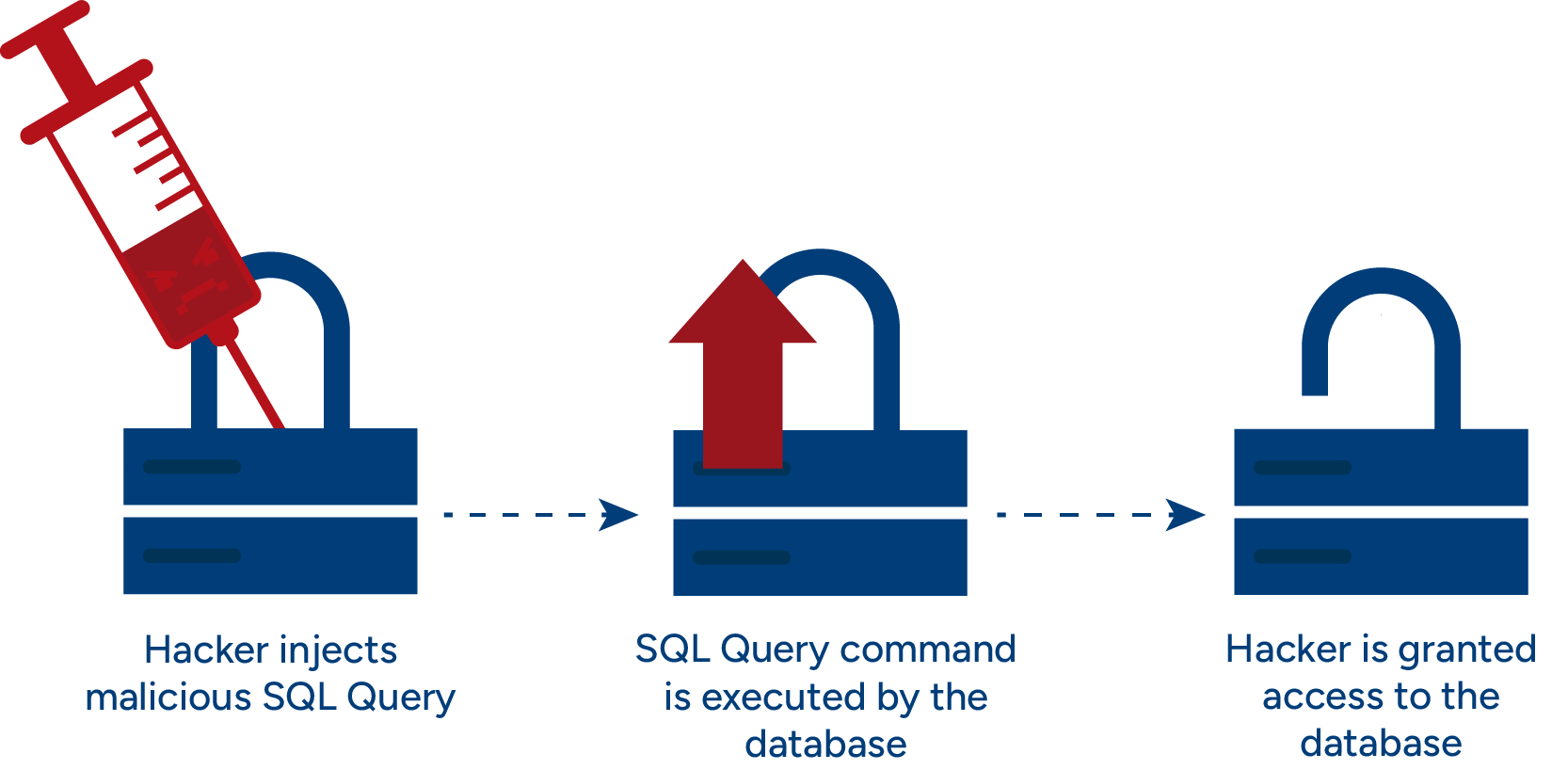
An SQL injection attack occurs when a criminal exploits a weakness in how SQL instructions are constructed. By entering malicious code into a login box, search field, or form, they can interfere with the request and trick the database into performing an action it was never meant to. For example, it might reveal sensitive information, change records, delete data, or create an easier way back in.
A good way to think about SQL injection is to compare it to a contractor arriving on-site with a written job sheet. To the staff member reading, it seems to be a routine instruction, for example, fix a door, inspect an access panel, and collect a set of keys. As a result, they will follow it as normal. However, someone may have slipped in extra instructions that were never approved, for example, unlock this room, release these records, grant access to this area. SQL injection works similarly: an attacker inserts malicious instructions into what appears to be a normal request, and the database executes them.
SQL injection is a serious risk. One of the best ways to prevent it is to treat user input as data, rather than as part of a database command.
What types of SQL injection attacks are there?
There are several types of SQL injection attacks that hackers may use, including:
In-band SQL injection
This is the simplest and easiest type of attack to initiate. It lets criminals launch an attack and get the results they want using the same method. For example, they might enter malicious code into a form or URL and see the results directly in the application’s response, or through an error message.
Blind SQL injection
With these attacks, hackers do not see the information directly. Instead, they have to work it out indirectly. They do this by sending a series of inputs and observing how the system responds, which can help them piece together details about the database and AI is making this a much easier task for cyber criminals to undertake.
Blind SQL injection attacks are time-consuming, as criminals need to send a series of requests and analyse the responses to build up a picture of how the database behaves.
Error-based SQL injection
Similar to blind SQL injection attacks, but instead, criminals deliberately trigger error messages that reveal useful details about the database or the query behind the application.
Out-of-band SQL injection
This is less straightforward than in-band SQL injection because criminals use a different method to receive the results of the attack. Instead of getting the information back through the application itself, they rely on the victim’s system communicating with another server under their control.
How do SQL injection attacks affect businesses?
The consequences of an SQL injection attack can be serious. If criminals gain access to a database, they may be able to steal data, change records, delete information, or use the breach to demand money, including through ransomware. In some cases, stolen data may then be sold or used in further attacks.
A recent example was the MOVEit transfer breach in 2023. MOVEit is file transfer software used by organisations to securely transfer sensitive files between systems and third parties. In the UK, the impact was felt through payroll provider Zellis, which served British Airways, the BBC, and Boots.
That matters because it shows how a single weakness in widely used software can affect many organisations at once. The National Cyber Security Centre said organisations using MOVEit in their supply chains suffered data breaches, with customer and employee data stolen. That kind of incident can then give rise to legal claims, regulatory scrutiny, disruption, and the long, expensive work of responding to the breach and supporting the people affected. If customer or employee data is involved, the fallout may also include data protection concerns.
How to avoid SQL injection attacks
As with most cyber risks, prevention is far better than dealing with the fallout after an attack. The steps below can all help reduce the risk of SQL injection. Guidance from OWASP (Open Worldwide Application Security Project) emphasises safer query design, proper input handling, and limiting what an attacker could do even if they got in. The National Cyber Security Centre also stresses secure coding, patching, and testing for common vulnerabilities such as SQL injection.
Update your software regularly. SQL injection attacks often exploit weaknesses in software that has not been kept up to date. Keeping your website, plugins, and related systems up to date reduces many avoidable risks. Software suppliers regularly issue patches and updates, which should be implemented immediately.
Use parameterised queries. When a website takes information from a user, such as a name, search term or login, it passes that information to a database. A parameterised query keeps user input separate from the database instruction itself, making it much harder for malicious code hidden in the input to be treated as a command. Your developer or website provider should be able to confirm whether this is in place.
Check what users can enter. Any data submitted through forms, search boxes, or login fields should be validated before it reaches your database. Where possible, only accept the values you expect, rather than filtering out unwanted ones afterwards.
Do not reveal database errors to users. When something goes wrong, websites often display error messages. If those messages include technical details about your database’s structure, they can give attackers useful clues. Any error messages shown to users should be kept simple and generic.
Limit what your applications can access. Think of this like giving a member of staff only the keys they need for their job. Applications should only have access to the parts of the database they genuinely need. This can help limit damage if a hacker does find a way in.
Use a web application firewall (WAF). A WAF sits between your website and incoming traffic, looking for suspicious patterns and blocking potential attacks before they reach your application.
Protect sensitive data properly. Strong protection of sensitive information can reduce the harm in the event of a breach. Passwords should never be stored in plain text, and other important data, such as payment details or personal records, should be properly secured.
Test your systems regularly. Penetration testing, vulnerability scanning, and code review can all help identify weaknesses before criminals do. A cybersecurity firm can carry these out on your behalf.
Get expert help if you are not sure. A cybersecurity specialist can review your systems and make sure the correct controls are in place, particularly if your business relies on customer-facing web applications that connect to databases. An independent audit by a cyber security expert may be beneficial.
It’s also worth taking a look at the National Cyber Security Centre's advice, including guidance for individuals, small- and medium-sized businesses, and sole traders to keep their digital presence secure. You may also find our guide to cyber security procedures and small business guide to cyber attacks useful.
Does cyber insurance cover SQL injection attacks?
Cyber insurance covers a range of digital threats and can help you investigate a breach, salvage data, and cover compensation costs where necessary. Policies also cover extortion and fraud, and provide a management and response service to help you deal with the immediate aftermath of a cyber attack and mitigate disruption and loss. It is, therefore, important to ensure that details of insurer contact points are immediately available to all responsible for managing a cyber incident. Many policies also provide access to staff training and risk management services undertaken by external consultants independent to the insurer; this is to help reduce the likelihood of a claim.
Need help with your cyber insurance?
Whether you need a quote, have a general enquiry, or want to talk it through over the phone, we're here to help.
SQL injection is still a common cyber risk. It has been around for years, but it remains effective where websites or applications do not handle user input safely.
SQL injection occurs when an attacker exploits a website or application that handles user input unsafely. If that input is passed to a database without the proper safeguards, it may be able to interfere with the query and cause it to perform in a way that grants them access to your systems or data.
The best protection is to build websites and applications securely from the start. That includes using parameterised queries, properly validating user input, keeping software up to date, limiting database access, and regularly testing systems.
It still exists because many organisations rely on older systems, rushed development, or poor coding practices. As long as websites and applications continue to pass user input to databases unsafely, SQL injection will remain a risk.
Related guides and insights

Data protection insurance – protecting your business from data breach risks
For businesses that fail to protect personal or sensitive data, the financial penalties can be crippling. We look at how data protection insurance can help minimise financial and reputational damage.

Cyber security audits explained
Cyber security audits help identify weaknesses and vulnerabilities, thereby lowering the risk of your business becoming a victim of cybercrime.

Identifying and mitigating cyber security risks in your business
Human error accounts for 95% of all cyber breaches, while more than one in four businesses experienced a cyber security breach in the last 12 months. Here’s how to identify and mitigate cyber security risks for your business.

What is a phishing attack?
As criminals become more sophisticated, scams can be harder to detect and it's vital to stay one step ahead.